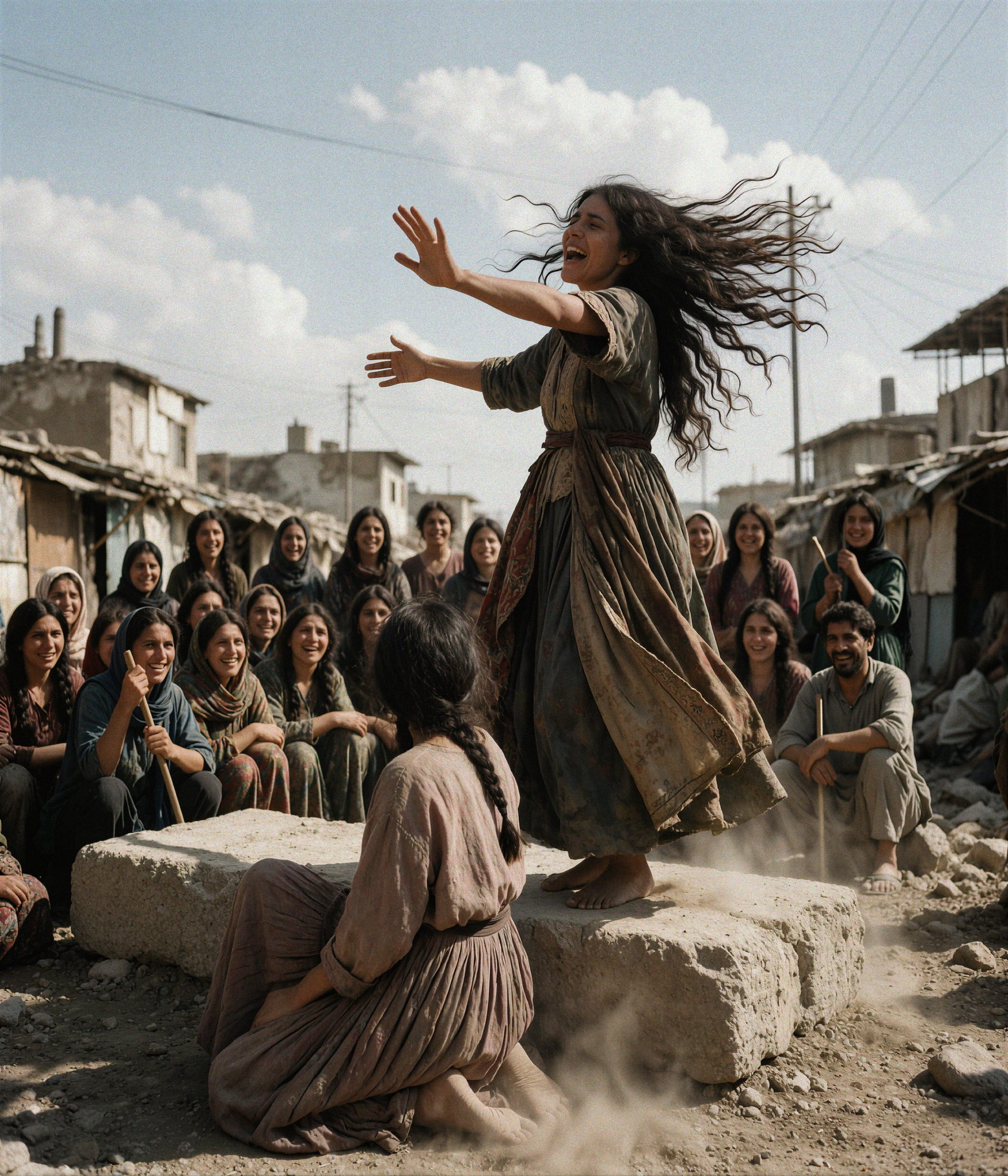
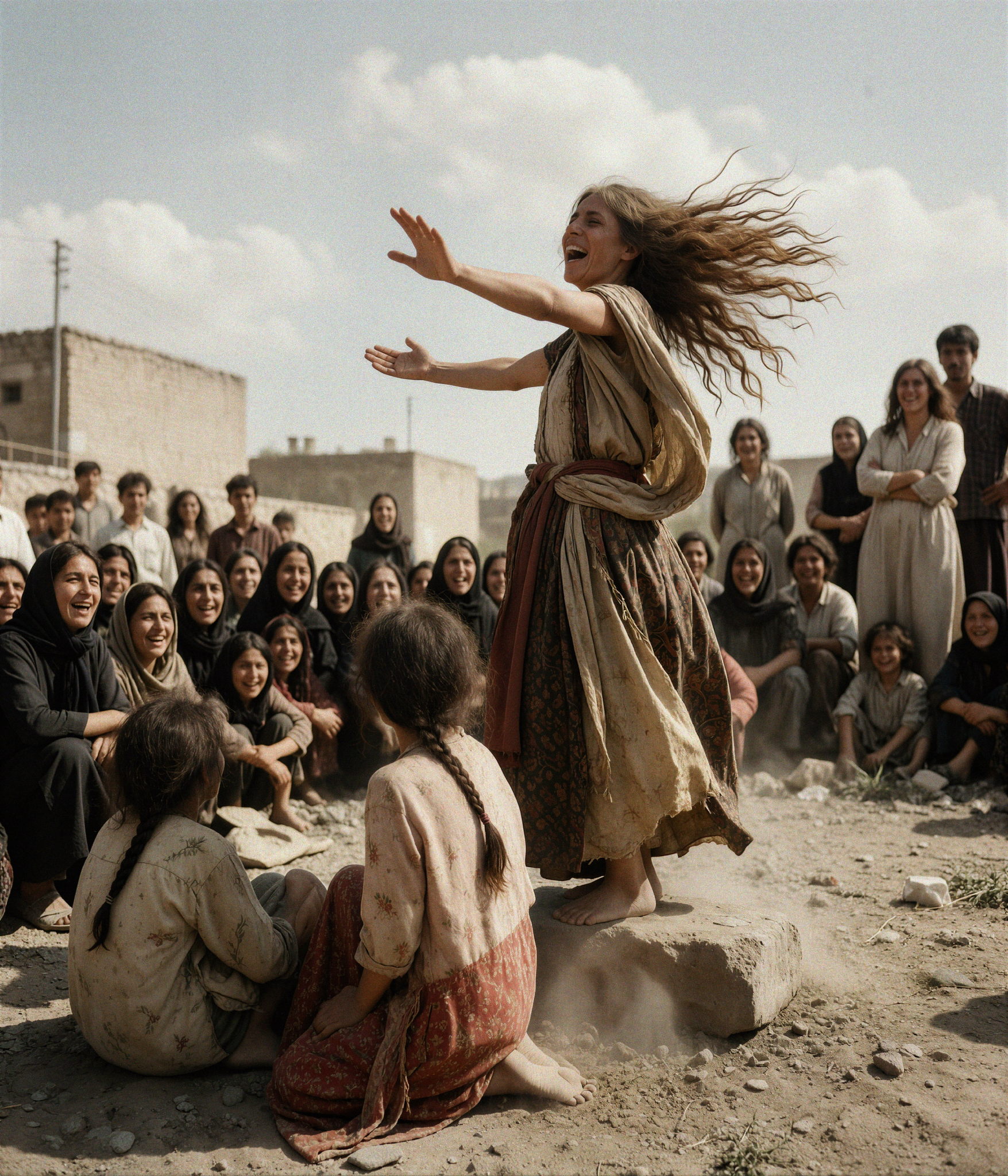
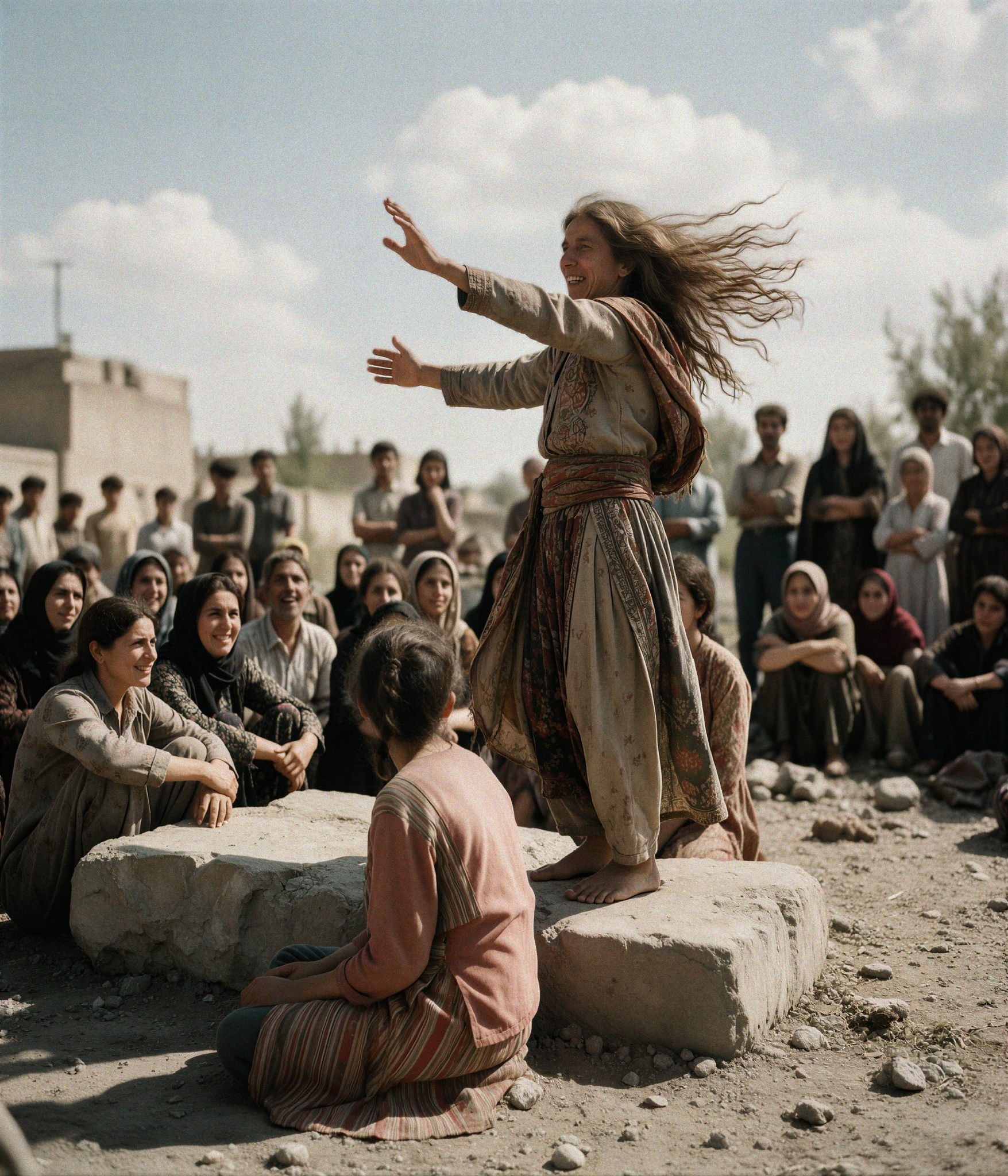
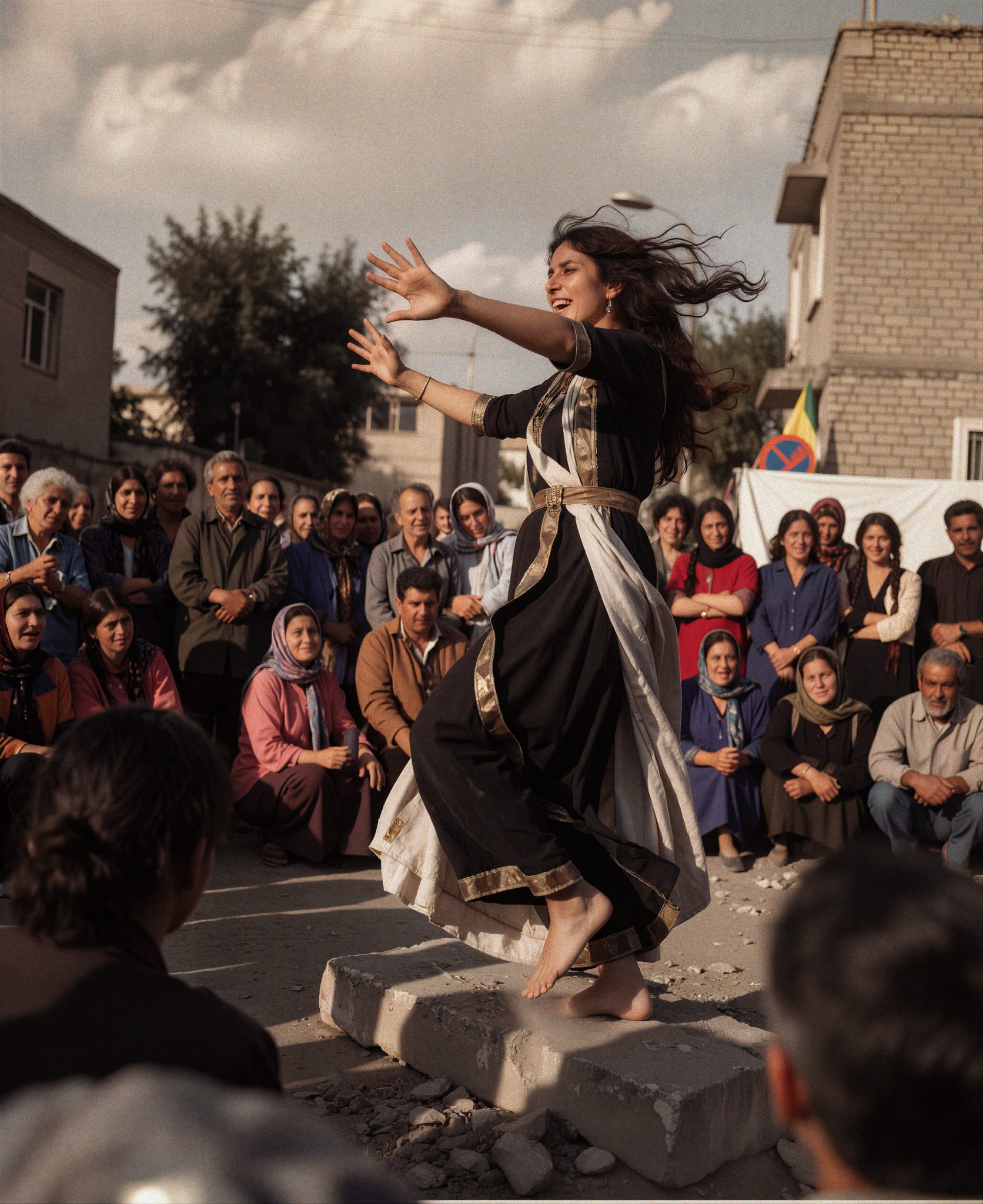
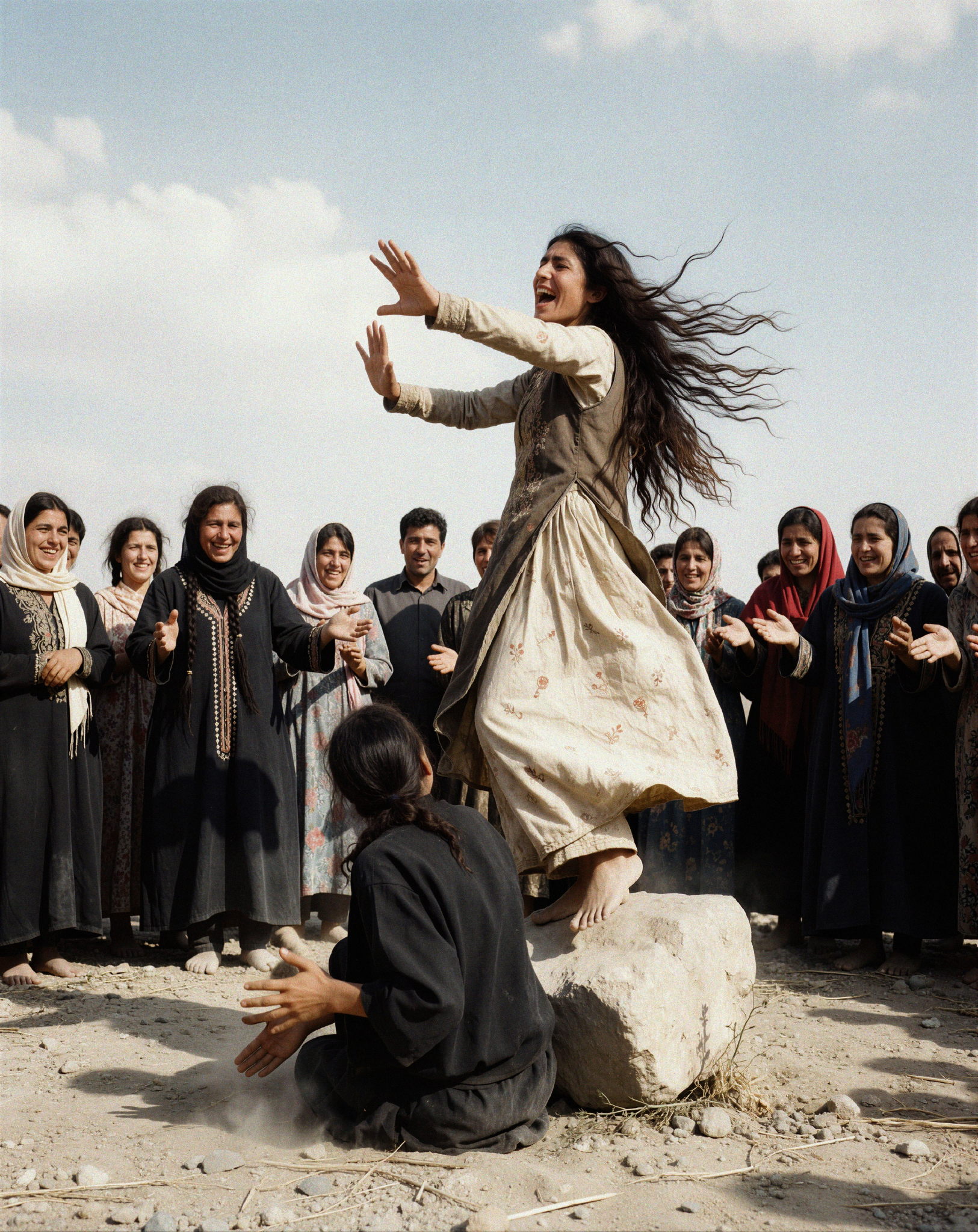
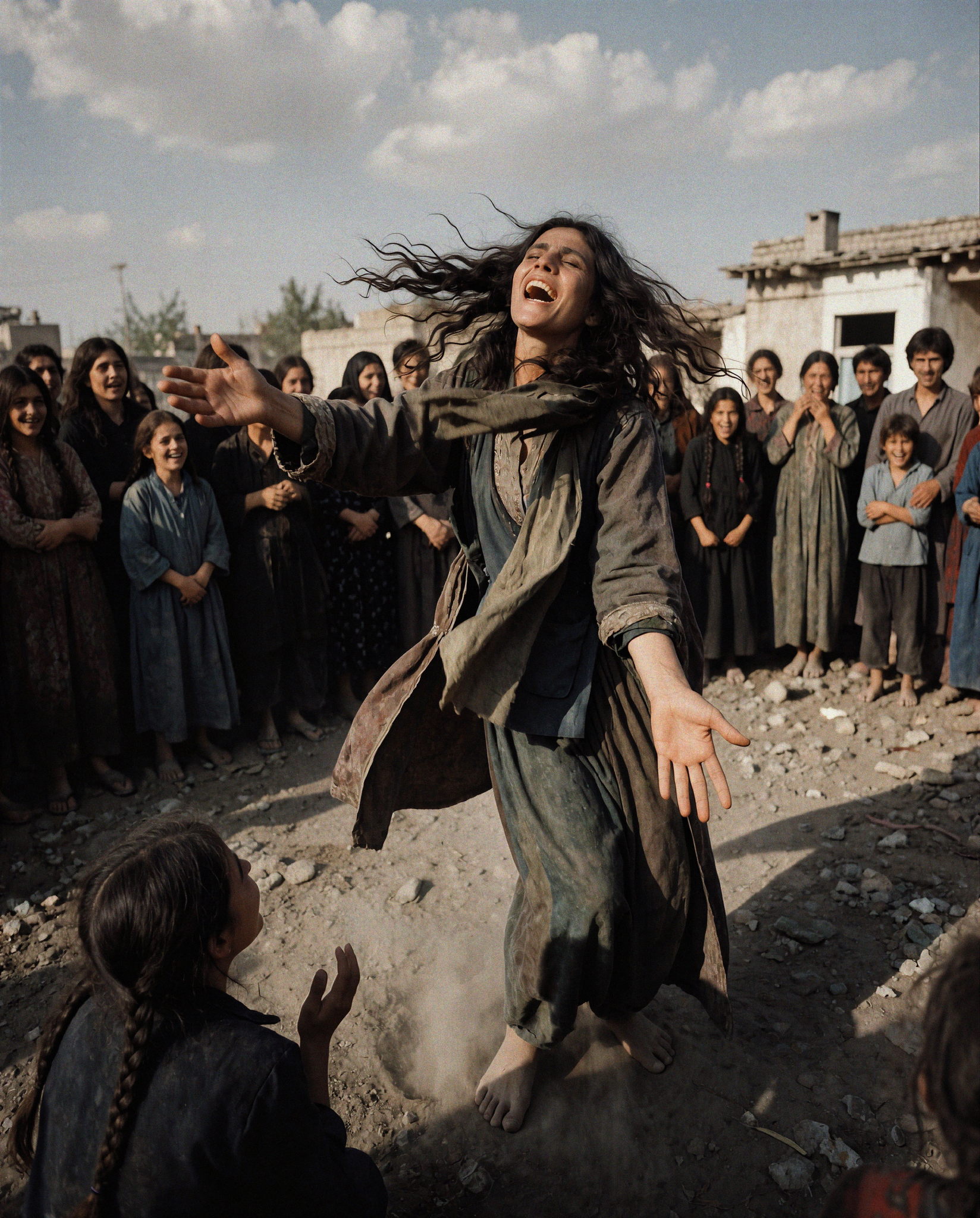
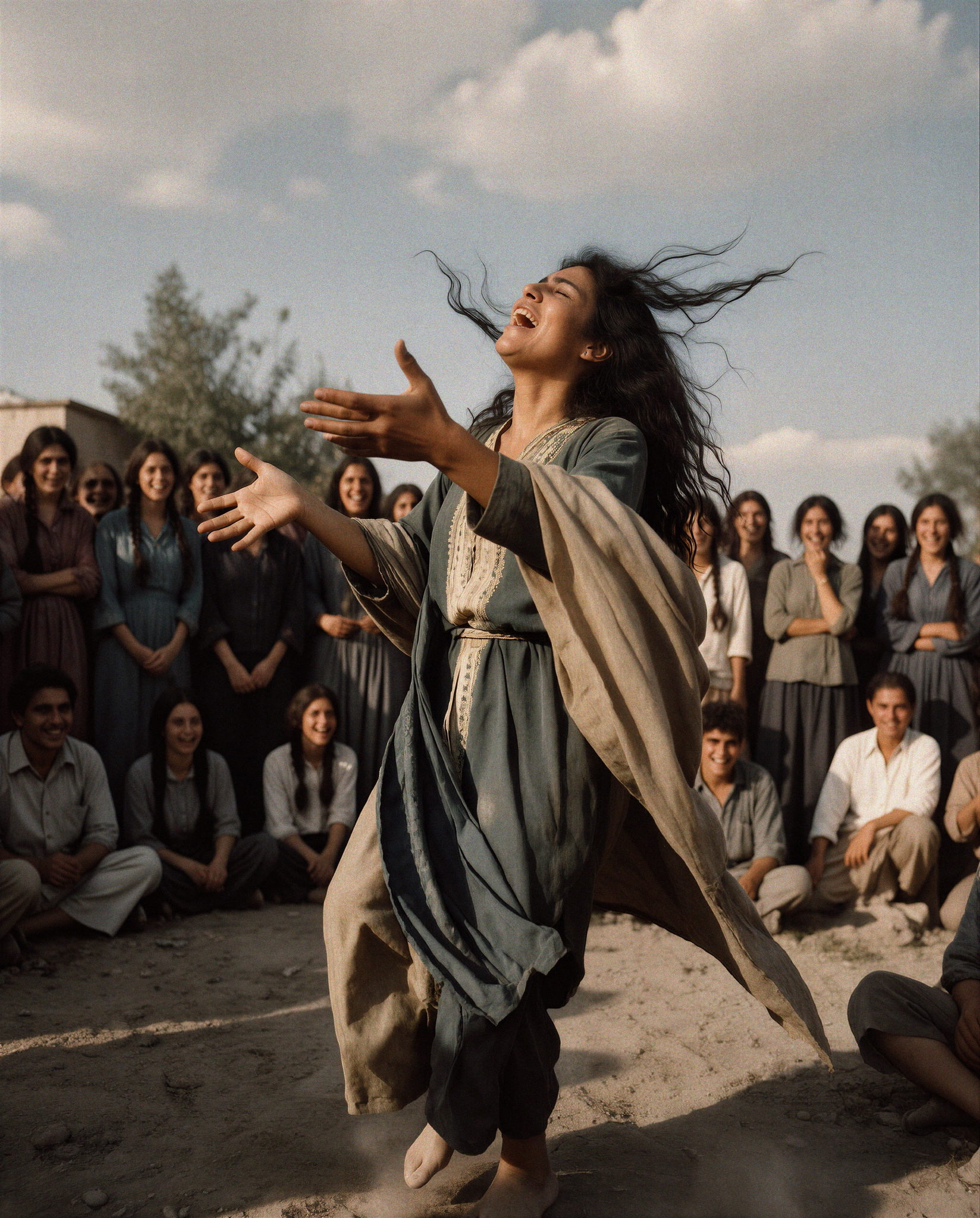
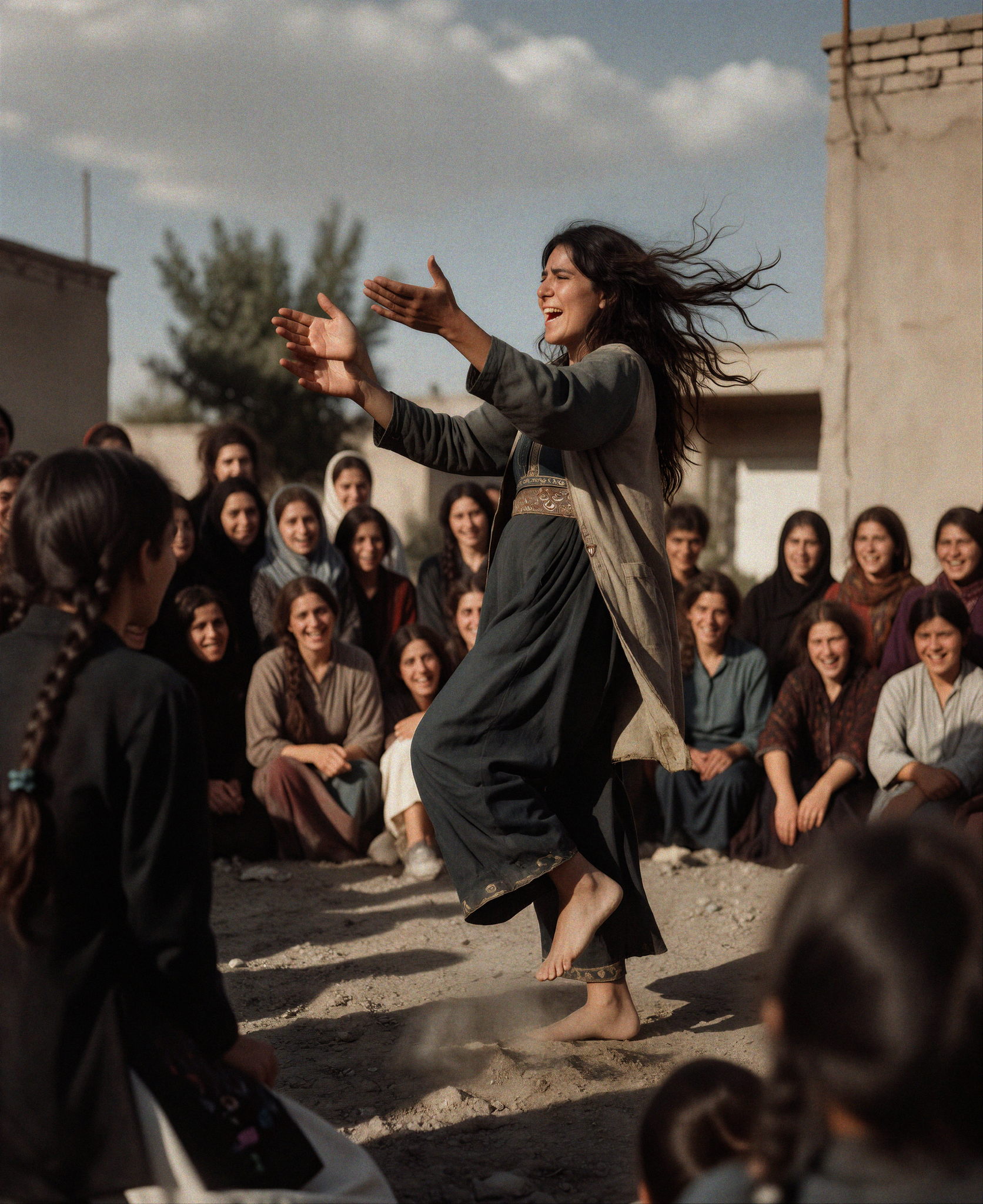
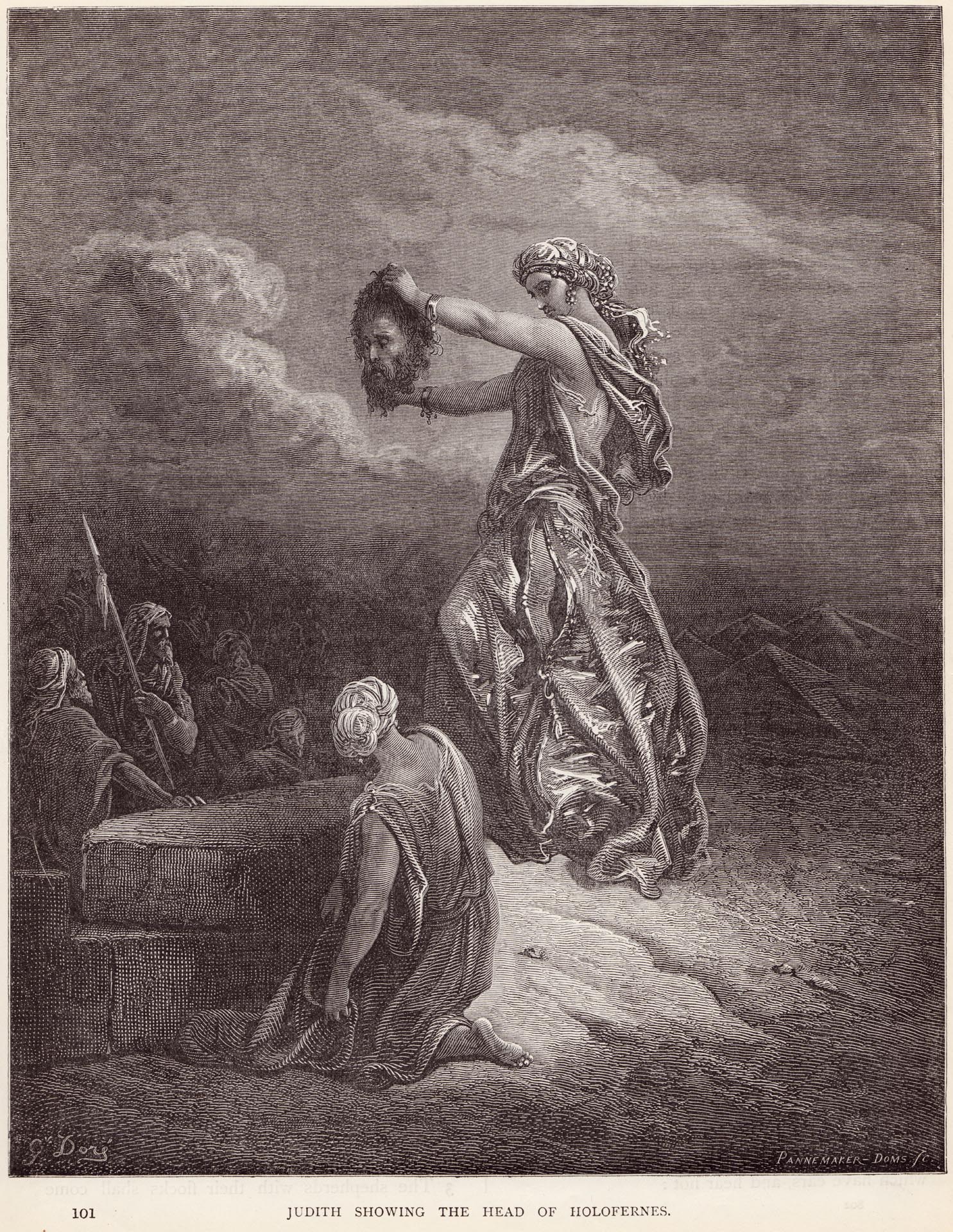
André Werner’s powerful body of work, “Judith is singing”, connects an icon of European art history with the contemporary freedom struggle of women against theocratic and patriarchal structures. This extensive series bridges past and present: while some works directly reimagine the composition of Gustave Doré’s famous woodcut Judith showing the head of Holofernes, others break free into universal, poetic visions of a singing Judith.
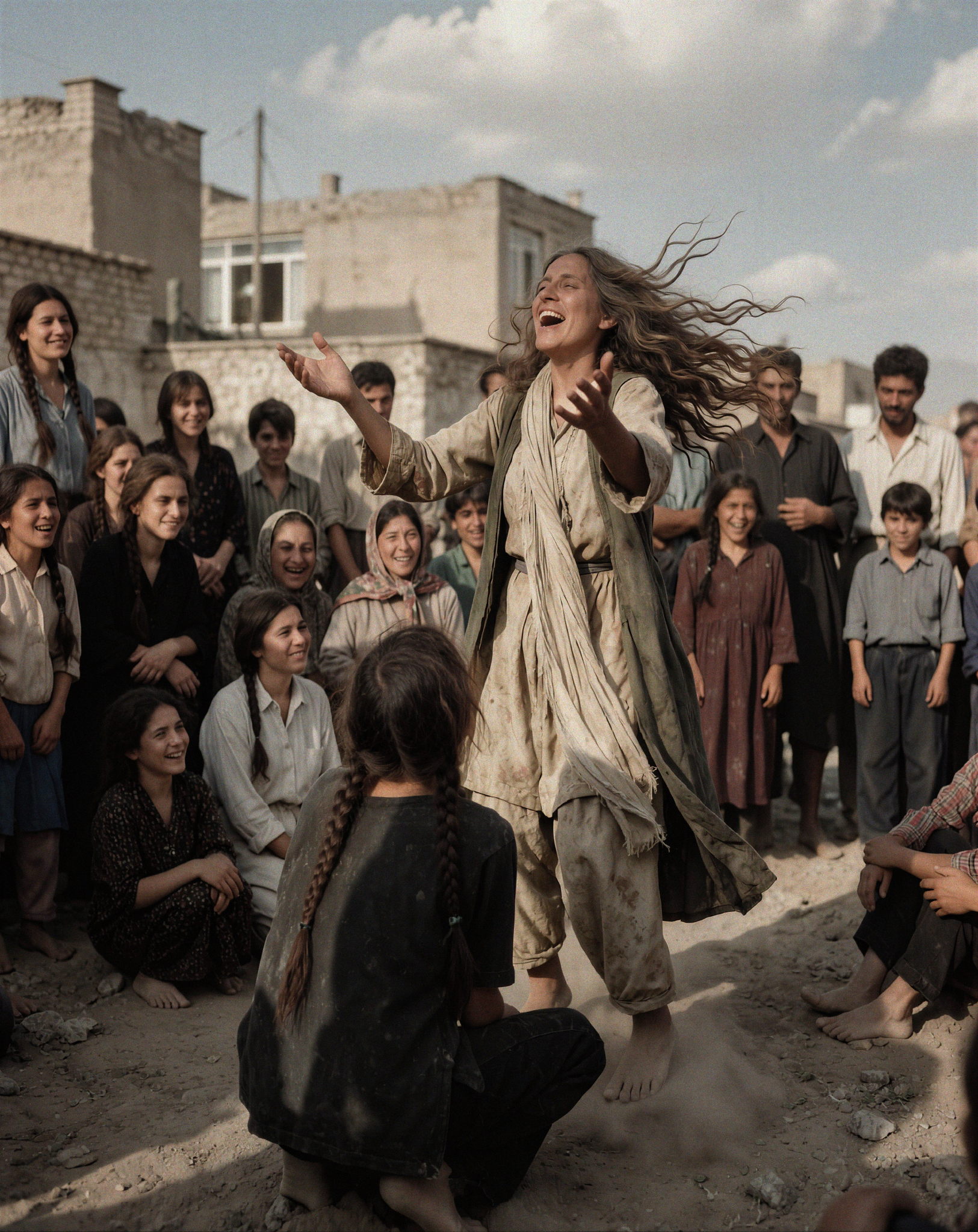
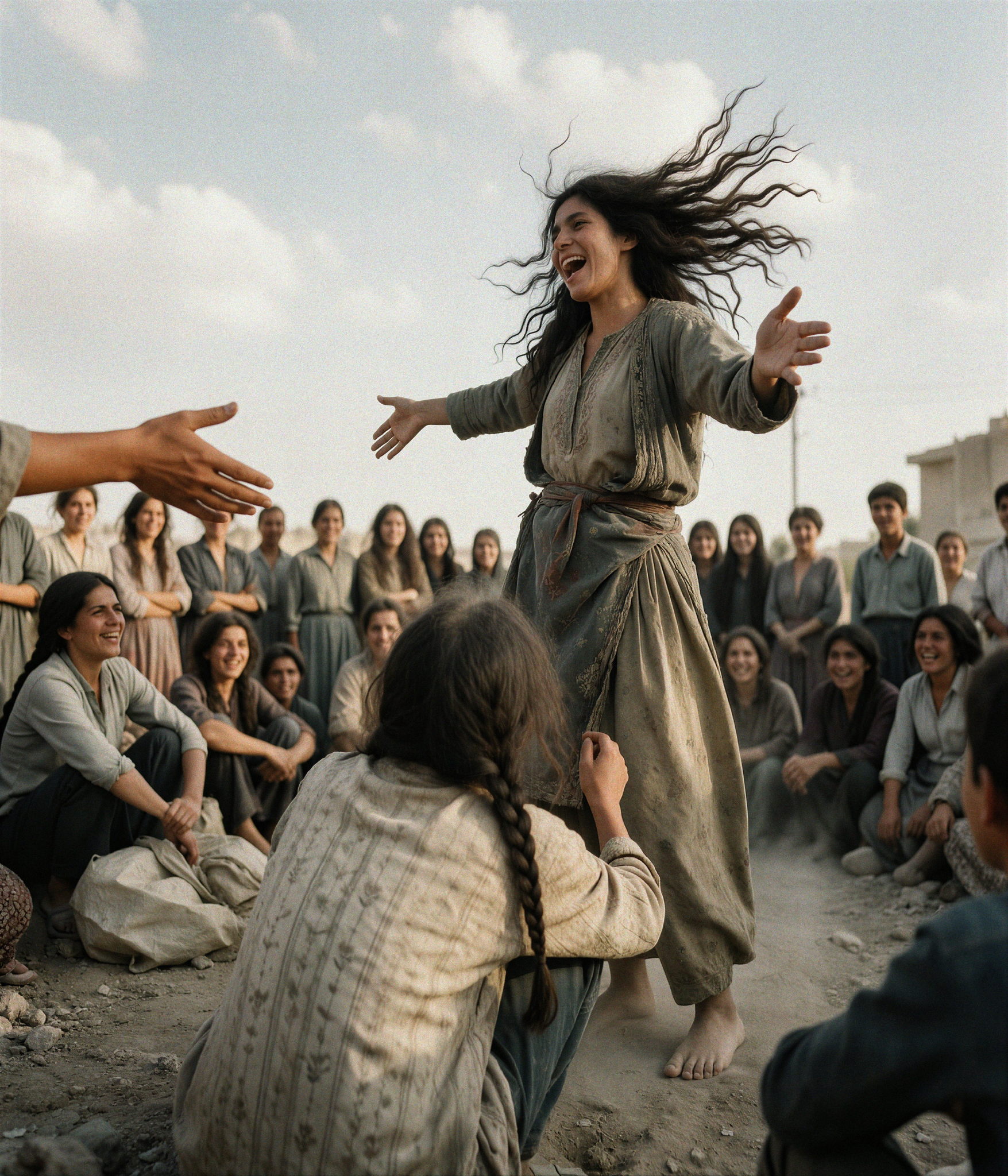
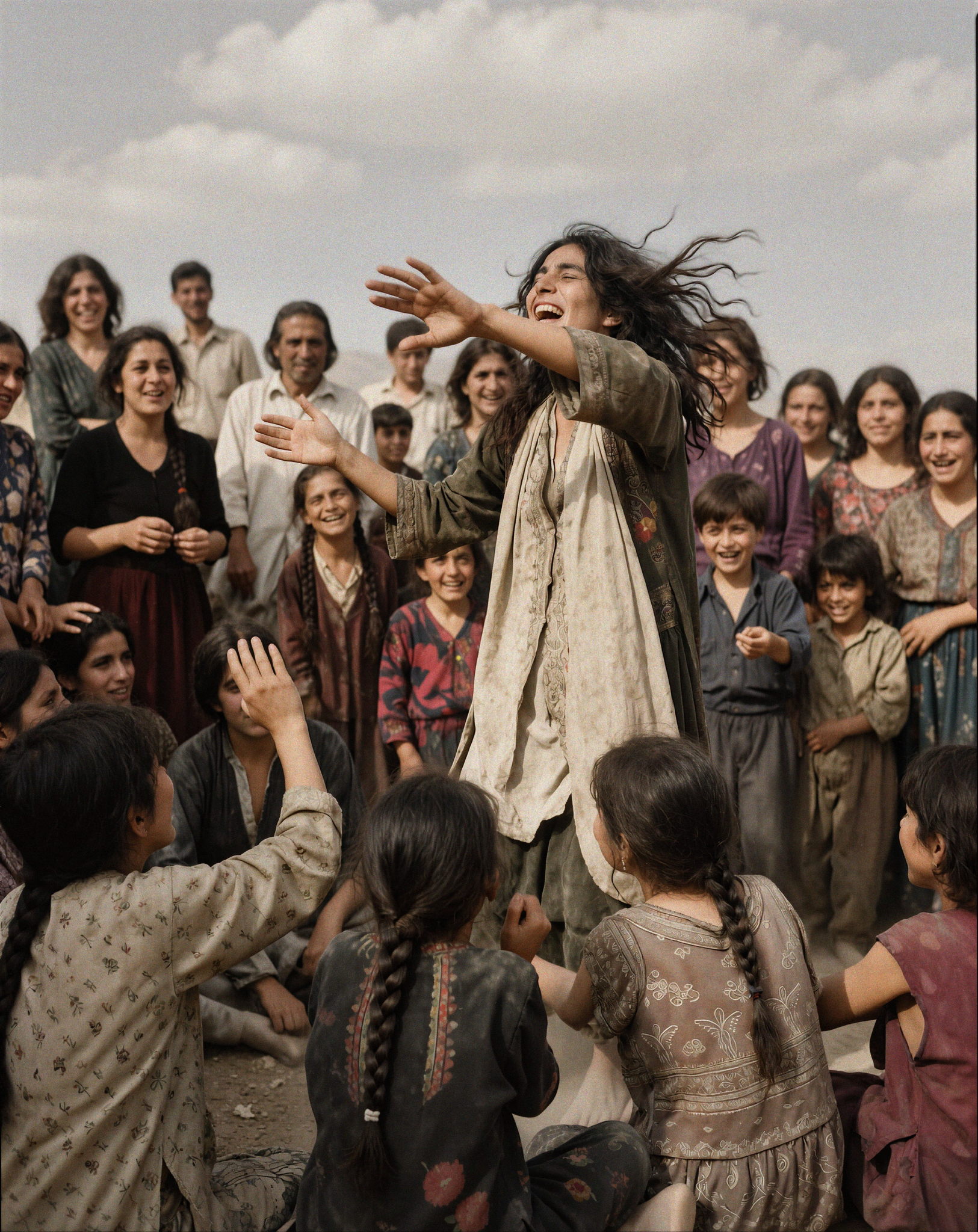
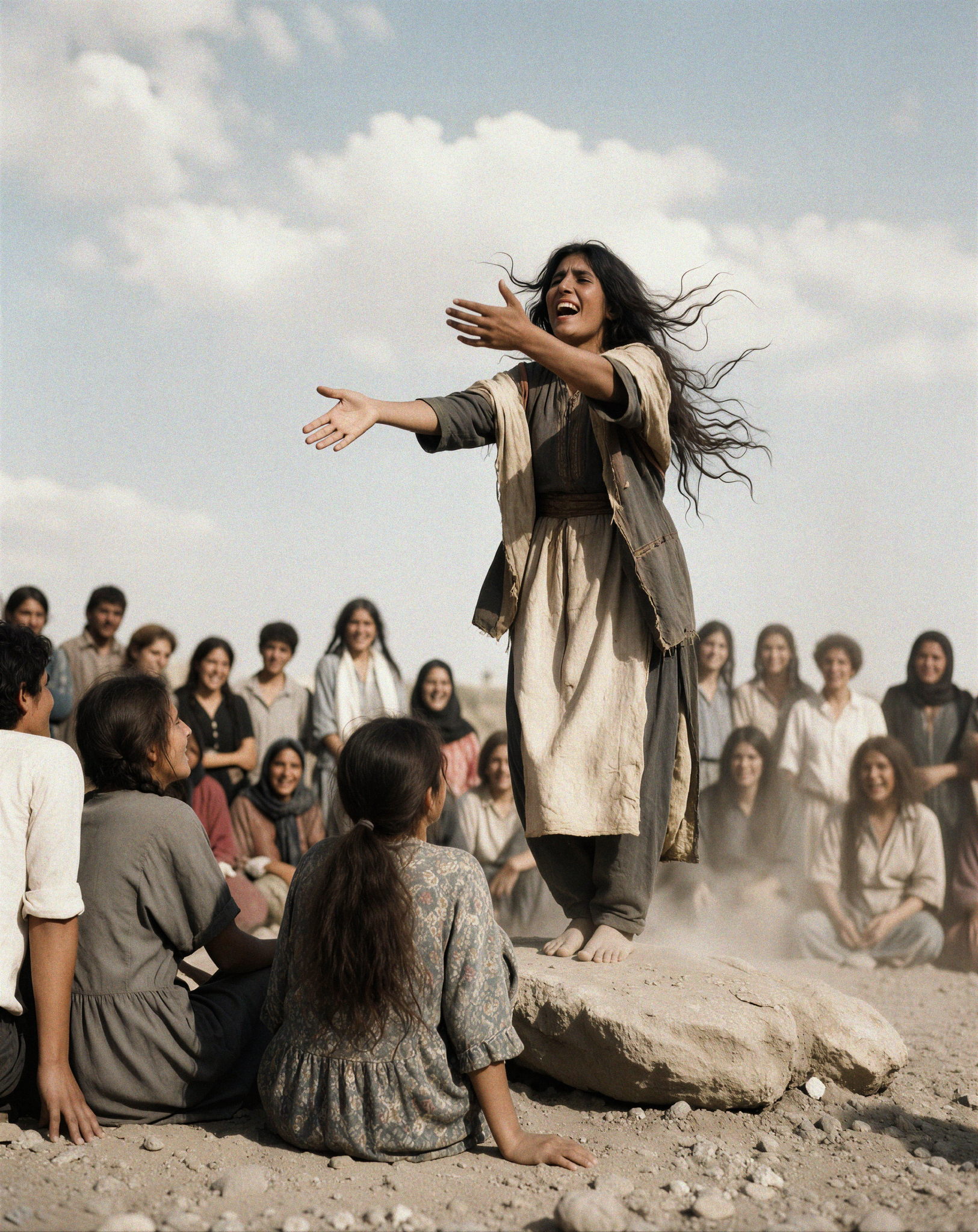
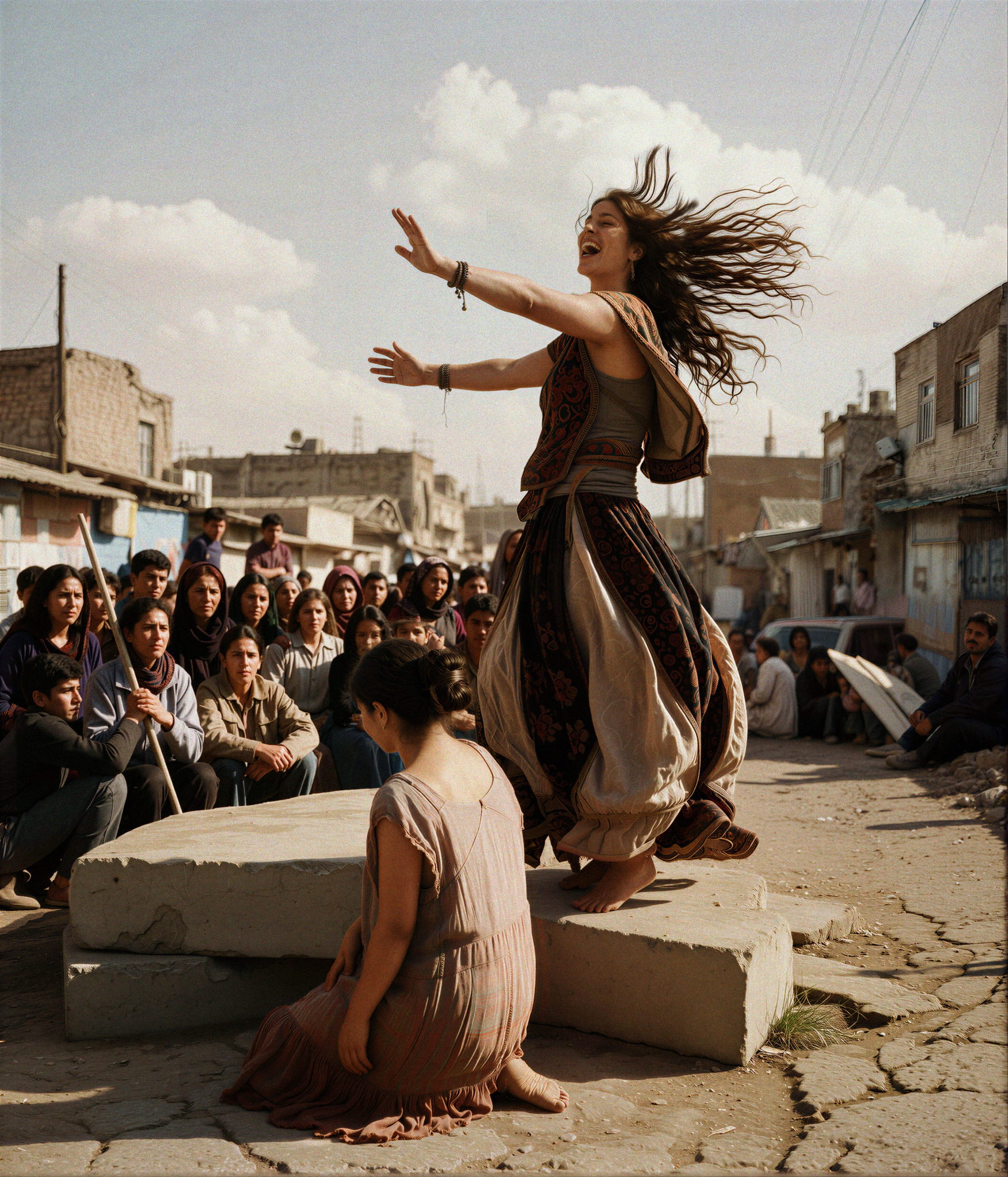
Werner radically subverts the historical model. Where Doré couples triumph with a brutal act of violence, this reinterpretation counters tyrannicide with the raw force of living defiance. The scene shifts to a dusty suburb of modern-day Tehran. Instead of a severed head, this Judith holds up her own face—unveiled, hair blowing in the wind, singing with fierce, passionate intensity.
These works are built to be experienced together. Presented in evocative constellations—as triptychs or cinematic sequences—they move beyond mere individual portraits to become a collective metaphor. The message is clear and boundless: every woman can be Judith. Through her own act of liberation, she echoes that freedom to women everywhere.
Printed as Fine Art prints on Baryta paper, the images possess an almost tactile, magnetic depth. Here, the political unfolds through the purely sensual. Under a theocratic order where uncovering one’s hair or singing in public is brutally suppressed, the very existence of women as individuals is denied—turning the mere act of singing into a revolutionary statement of collective defiance.
جودیت آواز میخواند | Judith is singing (after Doré) XXVI
André Werner, Judith is singing (after Doré) XXVI, 2026. From the series “Judith is singing”, a direct visual response to Gustave Doré’s famous woodcut Judith showing the head of Holofernes.
André Werners Triptychon „Judith is singing“ verbindet eine Ikone der europäischen Kunstgeschichte mit dem Freiheitskampf iranischer Frauen. …continue reading
 André Werner’s powerful body of work, “Judith is singing”, connects an icon of European art history with the contemporary freedom struggle of women against theocratic and patriarchal structures. This extensive series bridges past and present: while some works directly reimagine the composition of Gustave Doré’s famous woodcut Judith showing the head of Holofernes, others break free into universal, poetic visions of a singing Judith.